
by Dejan Pekic

Persistent Inflation May Point to More RBA Rate Rises
Posted by Dejan Pekic
An article in the Financial Review this week suggests the RBA has not done enough to curb inflation, with data estimating that Australia has the equal-highest core inflation rate among developed economies.
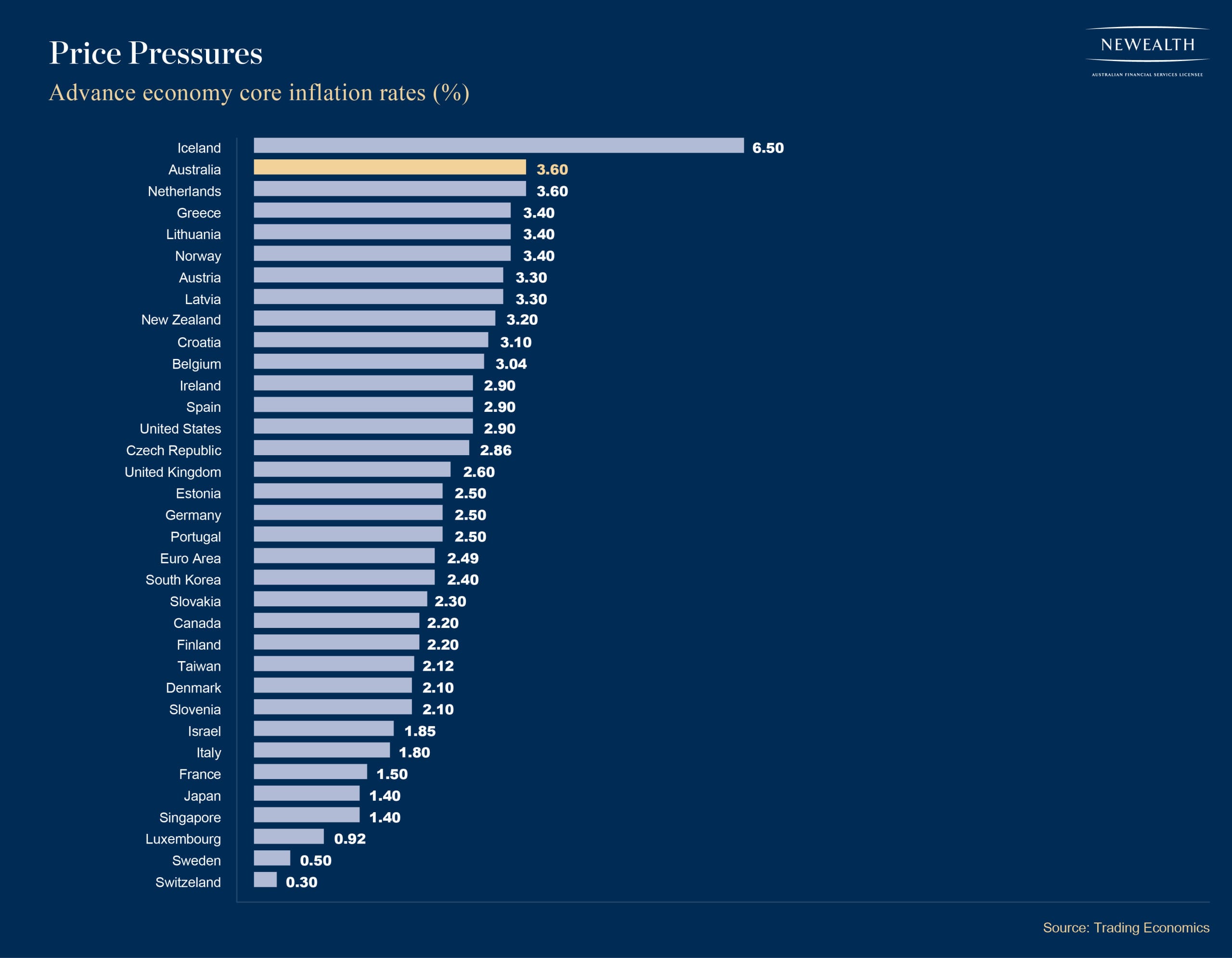
Research from Trading Economics puts Australia’s core inflation equal with the Netherlands, and when taking into account all advanced economies, second behind Iceland. Core inflation is measured differently across global economies, meaning the figures aren’t fully reliable, but it does reflect that inflation remains a key issue globally.
The Middle East conflict has played a role, with disruptions to shipping routes resulting in higher spends in sectors such as construction. Conversely, according to Treasurer Jim Chalmers, Australia currently has faster economic growth than all G7 countries aside from the US.
In deciding on cash rate moves, the RBA has a dual mandate to aim for both full employment and low inflation, a ‘narrow path’ approach that may be fuelling persistent price pressures. KPMG chief economist Brendan Rynne argues that the approach is no longer valid, and he predicts another rise at the next RBA meeting in August.
At Newealth, we stay on top of financial news to help you make informed financial planning decisions. If you’re concerned about how further rate increases will impact your portfolio, please contact us for a confidential call.
General Advice Warning:
The information in this blog is general in nature and does not take into account your personal objectives, financial situation or needs. You should consider whether the information is appropriate for you and seek professional advice before making any financial decisions.
Newealth Pty Ltd ABN 61 091 100 275 | AFSL 231297
Related Posts

Moving overseas doesn't mean leaving the Australian tax system behind. Whether you're heading off, already abroad or planning your return, your tax residency affects your CGT, HECS debt and super.

Australia's aging population is a ticking budget problem. Why bigger budget changes are coming, and what it means for your retirement plan.

Bucket companies just dodged a tax bullet. Treasury has scrapped its 70% tax rate proposal

